How to Repair Drywall Holes: A Complete Guide for Fayetteville Homeowners
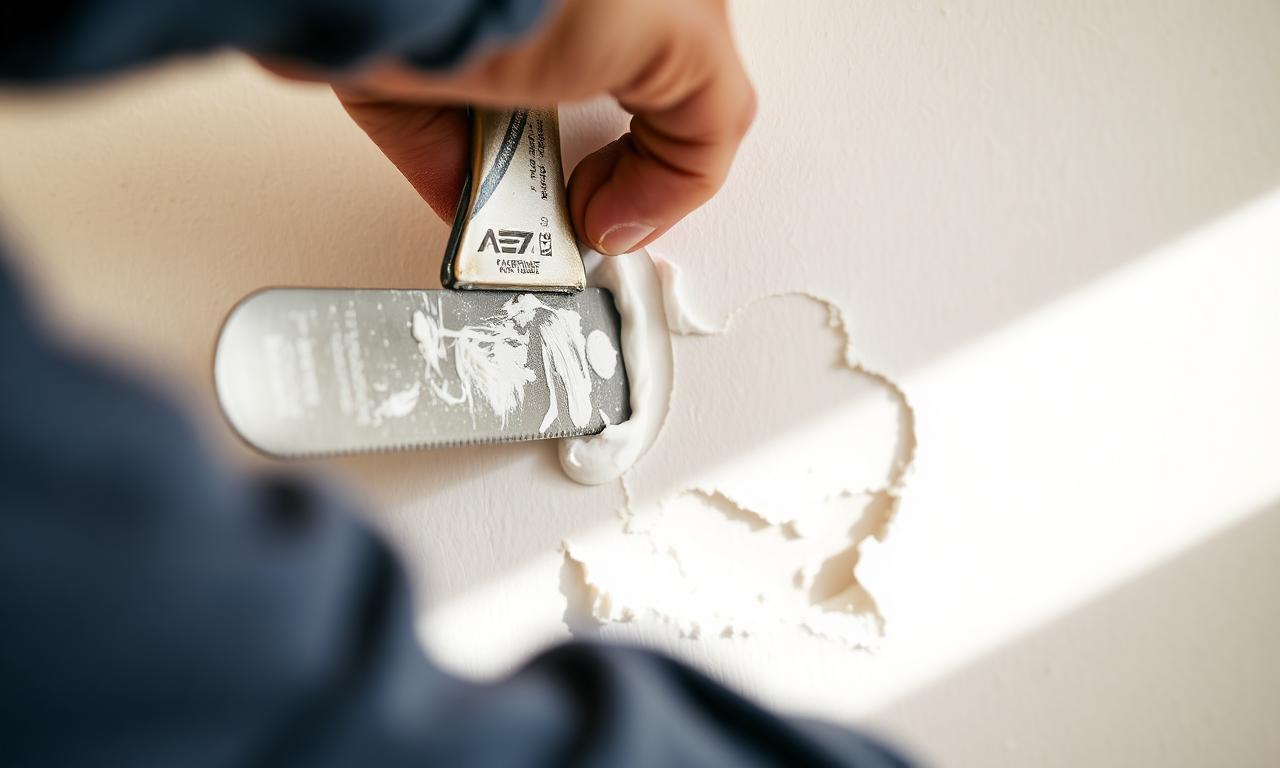
Drywall holes are one of the most common — and most fixable — repair jobs in any Fayetteville home. Whether the dog tail caught a corner, a door slammed too hard into the wall, or the previous owner removed a coat hook without thinking, the process for fixing it depends almost entirely on the size of the hole. This guide walks through the three patch sizes most homeowners deal with, the tools you actually need, and the small details that separate a repair you can see from across the room from one nobody notices.
Step 1: Size up the damage
Before you grab any tools, look at the hole in good light and measure the longest dimension. Anything under about a half-inch — nail pops, screw dimples, a doorknob ding — is a quick spackle fix. From a half-inch up to about four inches across, you'll want a mesh or California-style patch. Anything larger than that needs a piece of new drywall and some backing. Trying to use the wrong method for the size is the single most common reason a DIY patch eventually cracks, sinks, or shows through the paint.
Step 2: Gather the right materials
For small repairs, you'll need lightweight spackle, a 2-inch putty knife, fine sandpaper (220 grit), and a damp sponge. For medium holes, add a self-adhesive mesh patch, a 6-inch joint knife, and a small tub of joint compound (often called 'mud'). For large holes, you'll also need a scrap piece of half-inch drywall, a drywall saw, 1×3 wood strips for backing, drywall screws, paper tape, and a longer 10- or 12-inch knife for feathering. Northwest Arkansas humidity swings a lot through the year, so a setting-type compound (the kind that comes as powder and mixes with water) cures more reliably than premixed if the room is damp.
Step 3: Patch small holes
For anything you could cover with your thumb, simply press a small amount of spackle into the hole with your putty knife, pull it flush in one smooth stroke, and let it dry. Lightweight spackle shrinks very little, so most small repairs need only a single coat. Sand it lightly with 220 grit, wipe with a damp sponge to knock down dust, and you're ready for primer.
Step 4: Patch medium holes (½ inch to 4 inches)
For mid-sized holes, the mesh patch is your best friend. Cut it about an inch larger than the hole in every direction, peel the backing, and stick it directly over the damage. Spread a thin coat of joint compound across the patch, extending three to four inches past the edges. Let it dry fully — usually overnight in a typical Fayetteville home — then apply a second, wider coat and a third if needed. The trick is patience: feather each coat farther out than the last, and let each coat dry hard before sanding.
Step 5: Patch large holes (4+ inches)
Large holes require new material. Cut the damaged area into a clean rectangle. Slip a 1×3 wood strip behind the opening, screw it to the back of the existing drywall so it spans the gap, then cut a piece of new drywall to fit the rectangle and screw it into the wood strip. Tape the four seams with paper tape and joint compound, then apply three coats of mud, sanding lightly between coats. This is the kind of repair where most homeowners realize the texture and finishing steps are harder than the patching itself.
Step 6: Match the texture
Most Fayetteville and Northwest Arkansas homes have one of three wall textures: smooth, orange peel, or knockdown. Smooth walls are the easiest — just sand flat and prime. Orange peel and knockdown require a spray-on texture in a can, which you apply in light bursts from a couple feet back, let it set for a few seconds, and then knock down lightly with a wide knife if you're matching knockdown. Practice on a piece of cardboard first. Texture is where DIY repairs most often give themselves away, because a slightly heavier or lighter texture will catch light differently than the rest of the wall.
Step 7: Prime and paint
Always prime the repair before painting. Fresh joint compound is much more absorbent than the surrounding paint, so without primer the patched area will look flat or 'flashy' compared to the rest of the wall. Use a quality drywall primer, let it dry, then paint the entire wall corner to corner if possible. Spot-painting almost always shows, especially on walls that have been up for more than a year or two and have faded a touch.
When to call a pro
There are a few situations where the time, mess, and risk of a bad outcome make a professional repair the better call. Ceilings are one — gravity works against you, dust gets everywhere, and falling off a ladder while holding a knife is a bad afternoon. Water-damaged drywall is another, because the moisture often hides damage in the wall cavity that has to be addressed before patching. And texture matching on visible walls in the main living spaces is genuinely an art that takes practice to get right.
If you're dealing with drywall holes in Fayetteville, Rogers, Springdale, Bentonville, Bella Vista, Fort Smith, Conway, or anywhere else in Northwest Arkansas, Fayetteville Drywall can usually have a technician on-site within 48 hours. Call (479) 555-0900 for a free, no-pressure quote, or visit our contact page to request an estimate online.