Drywall vs Plaster Walls: What Northwest Arkansas Homeowners Should Know
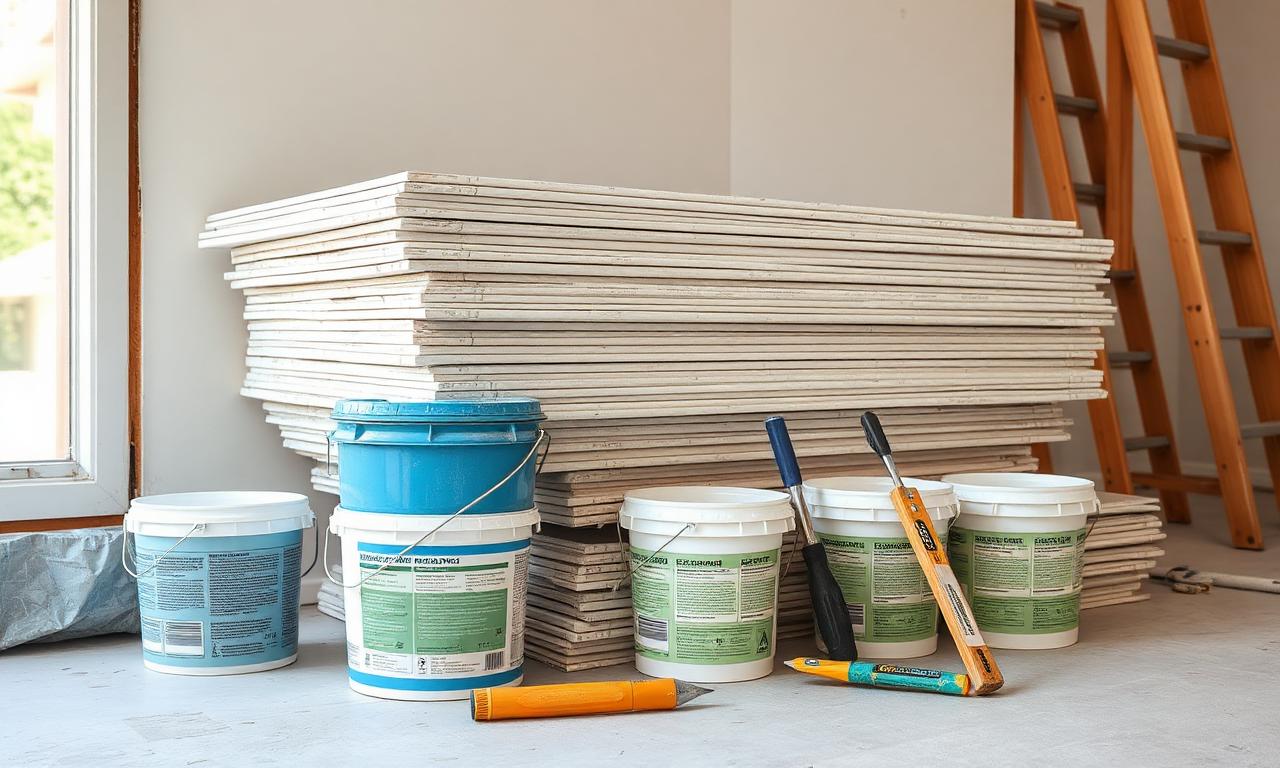
If your Fayetteville home was built after about 1955, it almost certainly has drywall on the walls and ceilings. If it was built before then — and there are plenty of those left in the Wilson Park, Mount Sequoyah, and Washington-Willow districts, plus older homes throughout Bentonville, Rogers, and Siloam Springs — you may still have true plaster. The two materials look similar once they're painted, but they behave very differently when they crack, get a hole punched in them, or have to be matched after a repair. Knowing which one you have will save you frustration when you start a project, and will help you ask the right questions when you call a contractor.
How to tell the difference
The easiest test is to push a thumbtack into a hidden spot like inside a closet. Drywall accepts a thumbtack with light pressure. Plaster is rock-hard and will either resist the tack or chip a small piece off. The second test is a knock test — drywall sounds slightly hollow, while plaster sounds dense and dull. Plaster walls are also noticeably thicker (about ¾ to 1 inch including the lath behind them) compared to standard drywall (½ inch).
Why drywall replaced plaster
Plaster requires skilled labor and three separate coats applied to wood lath, all of which take days to dry between coats. Drywall — invented as 'Sheetrock' in the early 1900s and dominant by the 1960s — could be hung and finished in a fraction of the time, by less specialized crews, and with far less moisture introduced into the building during construction. For postwar housing demand, drywall won decisively.
Repairing drywall
Drywall repair is what we do every day. Small holes can be patched with spackle or mesh patches and finished with joint compound. Larger holes require cutting in a new piece of board and feathering joint compound out across the seams. Texture is matched after the patch dries. The whole process for a single hole is usually one or two visits depending on size and complexity.
Repairing plaster
Plaster repair is more involved. Cracks in plaster are usually caused by failed bonding between the plaster and the lath behind it, so the repair often requires injecting bonding adhesive through small holes drilled along the crack. Holes in plaster require new lath (or backer mesh) plus three coats of plaster, each of which has to set before the next is applied. Texture and color matching old plaster takes practice, because the original surface often has subtle variations across a wall that drywall doesn't.
Why you should not patch plaster with drywall mud
Joint compound and plaster behave differently. Drywall mud is much softer than plaster once cured, so a joint-compound patch in a plaster wall often telegraphs through over time as the surrounding plaster expands and contracts. For small cracks, lightweight spackle is fine; for anything more, real plaster (or at minimum a setting-type compound) holds up much better long-term.
Should you replace plaster with drywall?
For a whole-house renovation, sometimes yes — especially if the plaster is failing in multiple rooms or you're opening walls for electrical or insulation work anyway. For a single-room or single-wall repair, no. Removing plaster is messy, creates a thickness mismatch at every doorway and window, and loses some of the sound-deadening and fire-resistance benefits that plaster gives you over drywall.
What we do for older Fayetteville homes
For older homes with plaster walls, we do two main things: small repairs in plaster matching the original substrate, and full-room conversions where it makes sense to take the plaster down and replace with drywall. We'll always tell you honestly which approach is going to look better long-term for the specific wall in question, rather than defaulting to whichever is faster for us.
Texture matters more than substrate
Whether you have drywall or plaster, the visible difference between a good repair and a bad one is almost always in the texture, not the patch itself. Both materials accept a finish coat that can be smoothed, sprayed with orange peel, or knocked down. Skilled finishers can make either repair vanish — and unskilled finishers can make either one stand out.
If you're dealing with repair questions on older drywall or plaster walls in Fayetteville, Rogers, Springdale, Bentonville, Bella Vista, Fort Smith, Conway, or anywhere else in Northwest Arkansas, Fayetteville Drywall can usually have a technician on-site within 48 hours. Call (479) 555-0900 for a free, no-pressure quote, or visit our contact page to request an estimate online.