Drywall Water Damage Repair: What Fayetteville Homeowners Need to Know
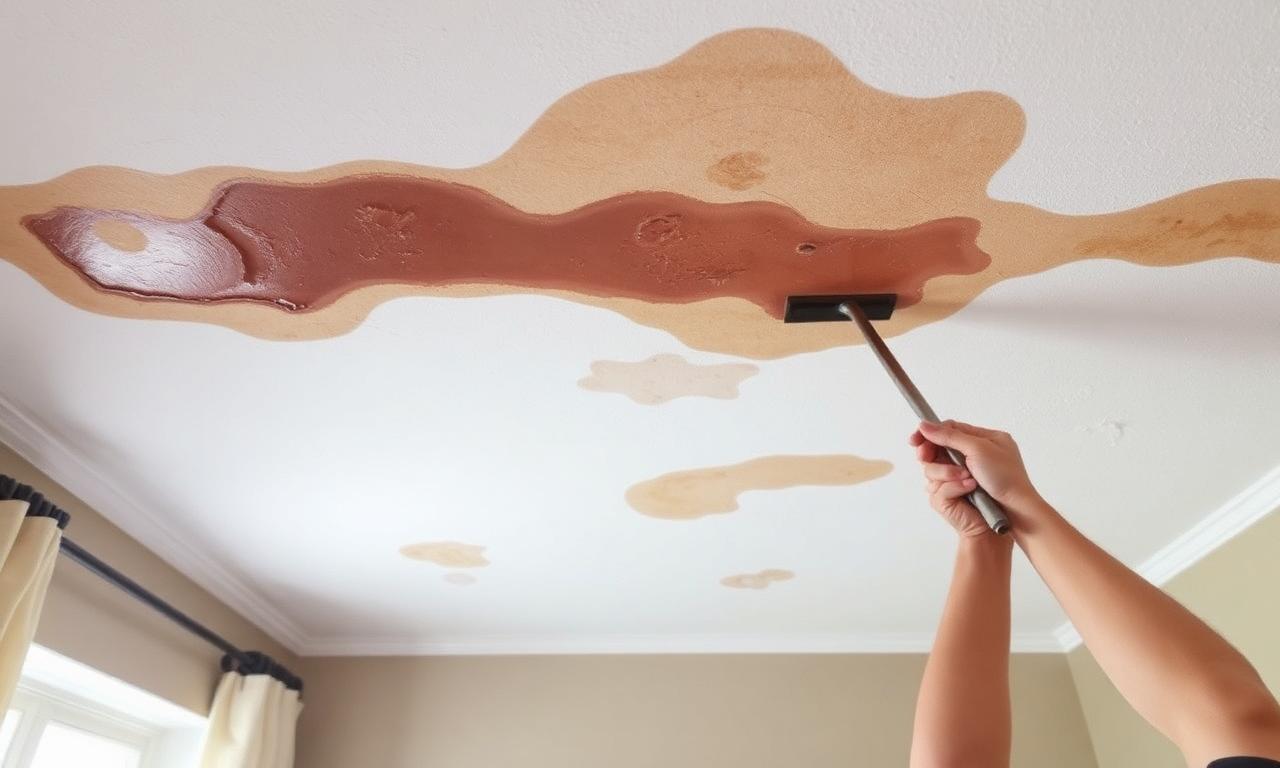
Water and drywall don't mix. Whether the damage comes from a roof leak after a thunderstorm, a failed supply line under a kitchen sink, a slow drip in a wall behind a shower, or condensation from an attic HVAC unit, water turns drywall from a firm, paintable surface into a soft, stained, sometimes moldy mess. For Fayetteville and Northwest Arkansas homeowners dealing with water-damaged drywall, this guide walks through what's actually happening behind the surface, why a 'paint over it' fix almost always fails, and how a proper repair is performed from start to finish.
What water does to drywall
Drywall is gypsum — essentially a soft mineral plaster — sandwiched between two layers of paper. The gypsum core absorbs water readily and loses structural integrity when it gets wet. The paper layers, meanwhile, are organic and become a food source for mold once they stay damp for more than 24 to 48 hours.
Step 1: Stop the water source
No drywall repair will hold if the underlying leak isn't fixed first. Before any drywall work begins, the source has to be identified and stopped. That might mean a plumber repairing a pipe, a roofer fixing flashing, or an HVAC tech sealing a drain pan. We won't repair drywall over an active leak, because the new repair will fail within months.
Step 2: Assess the extent of the damage
The visible stain is usually smaller than the actual damage. Water spreads through drywall paper and through the gypsum core, often traveling along the top of base plates or down studs. We probe the surrounding area for soft spots, check moisture readings with a meter, and look for signs that insulation, framing, or subfloor have also been affected.
Step 3: Remove the wet material
Any drywall that's soft, stained, or has visible mold growth has to come out. We typically cut back to the nearest studs or joists in clean rectangular sections so the replacement piece has solid framing to attach to. We also remove wet insulation, which loses both its insulating value and its dryness once it's been saturated.
Step 4: Dry the cavity
This step is often skipped by general contractors and almost always skipped by DIY repairs — and it's the reason the repair fails. The wall cavity behind the damaged drywall has to be fully dry before new drywall goes up. That usually means setting up an air mover and possibly a dehumidifier for 24 to 72 hours, and verifying with a moisture meter.
Step 5: Hang new drywall
Once the cavity is dry, we cut a new piece of drywall to fit the opening, screw it to the framing, and tape the seams. Three coats of joint compound — taping coat, fill coat, and finish coat — are applied with progressively wider knives, with light sanding between coats.
Step 6: Match the texture
Texture matching is what separates a repair you can see from one that disappears. Northwest Arkansas homes typically have orange peel or knockdown on the walls and either smooth or popcorn on the ceilings. We carry sample boards and spray equipment for all of these and test on cardboard until the texture matches before we touch the actual wall.
Step 7: Prime and paint
Fresh drywall and joint compound have to be primed before painting. Without primer, the patch will absorb paint differently than the surrounding area and the repair will show as a 'flat spot' even after multiple coats.
How long does it take?
A typical water damage repair takes one to three days depending on size. Small ceiling stains from a one-time leak can often be completed in a single visit. Larger areas usually involve a first visit to remove and dry, then a return visit a day or two later to hang, finish, and texture.
Will insurance cover it?
Most homeowners insurance policies cover sudden and accidental water damage — a burst pipe, a roof leak from a storm — but not gradual leaks or maintenance issues. We're happy to provide itemized estimates and photo documentation that work for insurance claims.
How to prevent it next time
The most common sources of water damage we see in Fayetteville homes are aging supply lines to icemakers and washing machines, slow leaks at toilet bases, roof flashing failures around chimneys and vents, and HVAC condensation drain lines that clog.
If you're dealing with water-damaged drywall in Fayetteville, Rogers, Springdale, Bentonville, Bella Vista, Fort Smith, Conway, or anywhere else in Northwest Arkansas, Fayetteville Drywall can usually have a technician on-site within 48 hours. Call (479) 555-0900 for a free, no-pressure quote, or visit our contact page to request an estimate online.