Fire-Rated Drywall: When You Need It in Northwest Arkansas
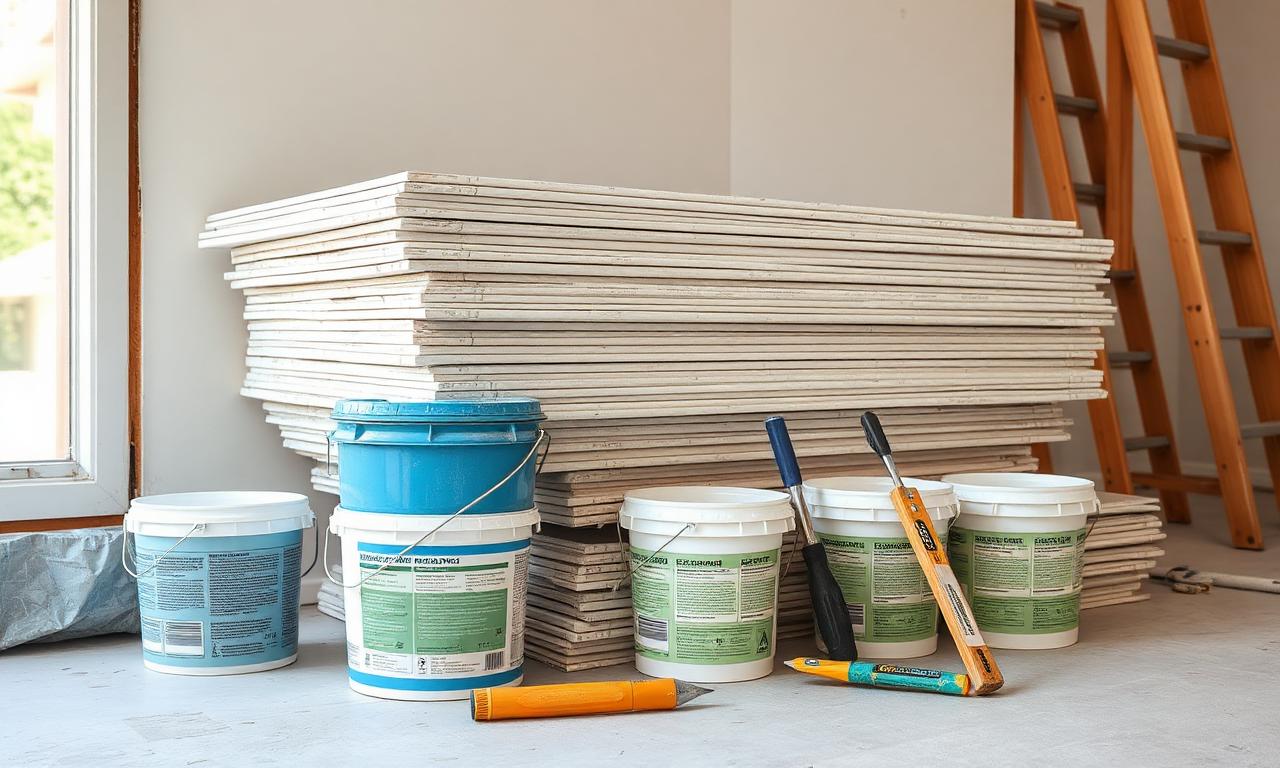
Most drywall in a typical Fayetteville home is standard ½-inch board. But in specific locations — most commonly the wall and ceiling separating a garage from the living space — building codes require fire-rated drywall. If you're repairing damage in one of those locations and you just patch with whatever drywall is at the home center, you may be inadvertently downgrading the fire rating of an assembly the code requires. Here's what you need to know.
What 'fire-rated' actually means
Fire-rated drywall, usually labeled Type X or Type C, contains glass fibers and other additives that keep the gypsum core intact longer when exposed to high heat. A standard ½-inch drywall assembly might hold up for 15 to 30 minutes in a fire. A 5/8-inch Type X assembly is rated for one hour, and certain Type C assemblies can be rated for up to two hours. That additional time is what allows occupants to escape and gives fire crews time to arrive.
Where it's required in residential homes
In a typical single-family home in Arkansas, the most common location is the garage. The wall between an attached garage and the living space must be a one-hour fire-rated assembly, which means 5/8-inch Type X drywall on the garage side, properly taped and finished. The ceiling of an attached garage with living space above it has similar requirements. Mechanical rooms and the underside of stairs are other common locations.
Why this matters for repairs
If you punch a hole in the garage wall and patch it with standard ½-inch drywall, you've created a weak spot in what was designed as a fire barrier. From a code perspective, that's a problem. From a real-world safety perspective, it's worse — a fire in the garage can break through that patched section much faster than it would through the surrounding wall.
How to tell if you have fire-rated drywall
Check the edge of an existing piece of drywall in the location in question — Type X is almost always 5/8-inch thick (compared to ½-inch standard), and many manufacturers print 'Type X' on the paper face every few feet. If you can't find a printed marking, the thickness alone is a good indicator: 5/8-inch board on a garage wall or ceiling almost certainly means fire-rated.
Patching fire-rated drywall
The patch material has to match what's already there. If the existing wall is 5/8-inch Type X, the patch needs to be 5/8-inch Type X. You also need to maintain the integrity of the seams — that means taping with fire-rated joint compound or, more practically, using a setting-type compound that hardens chemically rather than by drying.
Common code locations beyond the garage
In multi-family construction, fire-rated assemblies are much more common — the walls and floors between units typically require one or two-hour ratings. In commercial work, fire-rated assemblies show up in corridors, stairwells, and around mechanical rooms. For commercial drywall repair, we always check the original construction documents (or the local fire marshal) to confirm the rating before patching.
Smoke seal and penetrations
Fire-rated drywall is only part of the fire-resistance picture. Any penetration through the wall — an electrical outlet, a duct, a pipe — must be sealed with intumescent caulk or firestop material to maintain the rating. We carry these products on the truck for fire-rated repairs.
When to call a pro
If your repair is in a garage, an attached mechanical room, or any other location you suspect might be fire-rated, it's worth calling rather than guessing. A repair done in standard drywall in a fire-rated assembly can cause insurance and resale issues later, on top of the obvious safety concern.
If you're dealing with a fire-rated drywall repair in Fayetteville, Rogers, Springdale, Bentonville, Bella Vista, Fort Smith, Conway, or anywhere else in Northwest Arkansas, Fayetteville Drywall can usually have a technician on-site within 48 hours. Call (479) 555-0900 for a free, no-pressure quote, or visit our contact page to request an estimate online.