Why Drywall Cracks Keep Coming Back — And How to Fix Them Permanently
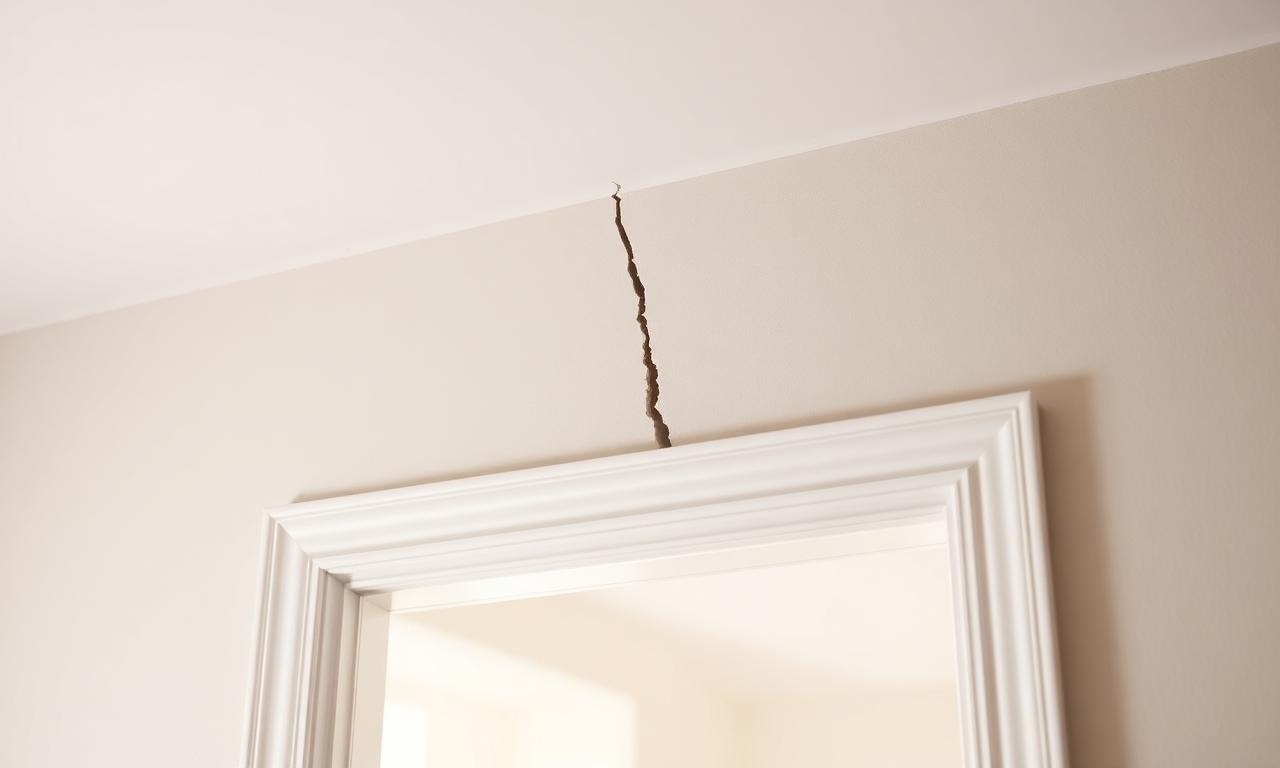
If you've patched the same crack above your bedroom doorway three times and it's back again this season, you're not doing the repair wrong — you're treating a symptom while ignoring the cause. Drywall cracks that keep reopening tell a story about what's happening behind the wall, and understanding that story is the only way to fix the crack permanently. Here's how to read the signs and what to do about each type.
Cracks above doors and windows
These are by far the most common type of recurring crack we see in Northwest Arkansas. They happen because doors and windows are weak points in the framing — there's no continuous stud above them, just a horizontal header carrying the load from above. When the home expands and contracts with seasonal humidity, the corners of those openings move slightly, and that movement shows up as a hairline crack running diagonally up from the corner. The fix isn't just more mud — it's tape across the crack, ideally fiberglass mesh tape bedded in setting-type compound, which has more strength than premixed joint compound and resists future movement.
Cracks at corners of rooms
Inside corners where two walls meet, or where a wall meets a ceiling, often crack because of how the drywall was installed. If the corner bead was attached only with mud and no fasteners, or if paper tape was installed too dry, the corner can separate from the wall over time. The permanent fix is to remove the old corner treatment, apply a fresh paper-tape-and-mud corner with proper bedding, and feather it out cleanly. For ceilings, sometimes a flexible caulk applied along the wall-ceiling joint is the right answer, because that joint is supposed to move slightly as the framing flexes.
Long horizontal cracks across walls
A long horizontal crack — especially one that follows the line where two drywall sheets butt together — almost always means the seam was finished poorly during construction. Either no tape was installed, or only a thin coat of mud was used. The fix is to cut the seam open along its length, apply fresh paper tape with three coats of mud, sand, and refinish. Short of that, the crack will keep reopening regardless of how many times it's patched.
Staircase cracks
Diagonal cracks that climb walls in a staircase pattern usually indicate foundation movement. In Fayetteville, the clay-heavy soil expands when wet and contracts when dry, which causes the foundation to lift and settle slightly throughout the year. Hairline staircase cracks are usually cosmetic and can be repaired the same way as any other crack. But staircase cracks wider than a credit card, or ones that are wider at one end than the other, should be evaluated by a foundation specialist before any drywall repair happens.
Cracks at the ceiling-wall joint
This joint is supposed to flex. The fix for most cracks here isn't drywall tape and mud — it's a flexible paintable caulk applied along the joint and tooled smooth. Caulk moves with the seasonal flex of the framing without cracking, which mud cannot do.
Cracks around outlets, switches, and light boxes
Cracks radiating from electrical boxes usually happen because the drywall was cut tight to the box during installation and there's no flex space. The fix is to slightly oversize the opening (a quarter inch all around is plenty), patch the cracks with mesh tape and mud, and ensure the box itself is firmly attached to a stud.
Cracks that follow framing lines
If you see a long crack that follows the line of a stud or joist, it usually means the framing member has twisted or moved. These cracks rarely respond to surface repair — the long-term fix is often to secure the framing from the back side of the wall, which requires opening up the wall. For a single noticeable crack, mesh tape and three coats of mud will usually hold for several years.
When to call us
If you've patched the same crack twice and it's back, it's worth a 15-minute consultation. We can usually tell from a photo whether the crack is a simple cosmetic issue, a finishing issue from the original construction, or a symptom of something structural that needs to be addressed first.
If you're dealing with recurring drywall cracks in Fayetteville, Rogers, Springdale, Bentonville, Bella Vista, Fort Smith, Conway, or anywhere else in Northwest Arkansas, Fayetteville Drywall can usually have a technician on-site within 48 hours. Call (479) 555-0900 for a free, no-pressure quote, or visit our contact page to request an estimate online.